The short answer
Start from your product, packs and demand, not from a machine catalogue. Decide the capacity and level of automation you need, list the formats the line must handle, then compare quotations on what they include: real output, scope of supply, utilities, installation, training, spares and service.
Key takeaways
- Choose the line for your product and packs; the machine follows from them.
- Rated speed is not real output. Plan for efficiency, changeovers and the slowest machine on the line.
- Compare quotations line by line on scope, utilities, service and spares, not on the headline price.
- Agree acceptance criteria for commissioning before you sign the purchase order.
Start with the product and the pack
A bottling line is built around what it fills. Before speaking to vendors, write down the product, whether it is still or carbonated, whether it is filled hot or cold, the container material, every pack size, the cap type and the label style.
This one page of requirements does two things. It stops vendors quoting for the line they want to sell, and it lets you compare quotations that answer the same question.
Decide the capacity you really need
Size the line from demand: the volumes you expect to sell in your first years, how sales vary across seasons, and how many shifts you plan to run. Leave room to grow, either in the line itself or in the space and utilities for a second line.
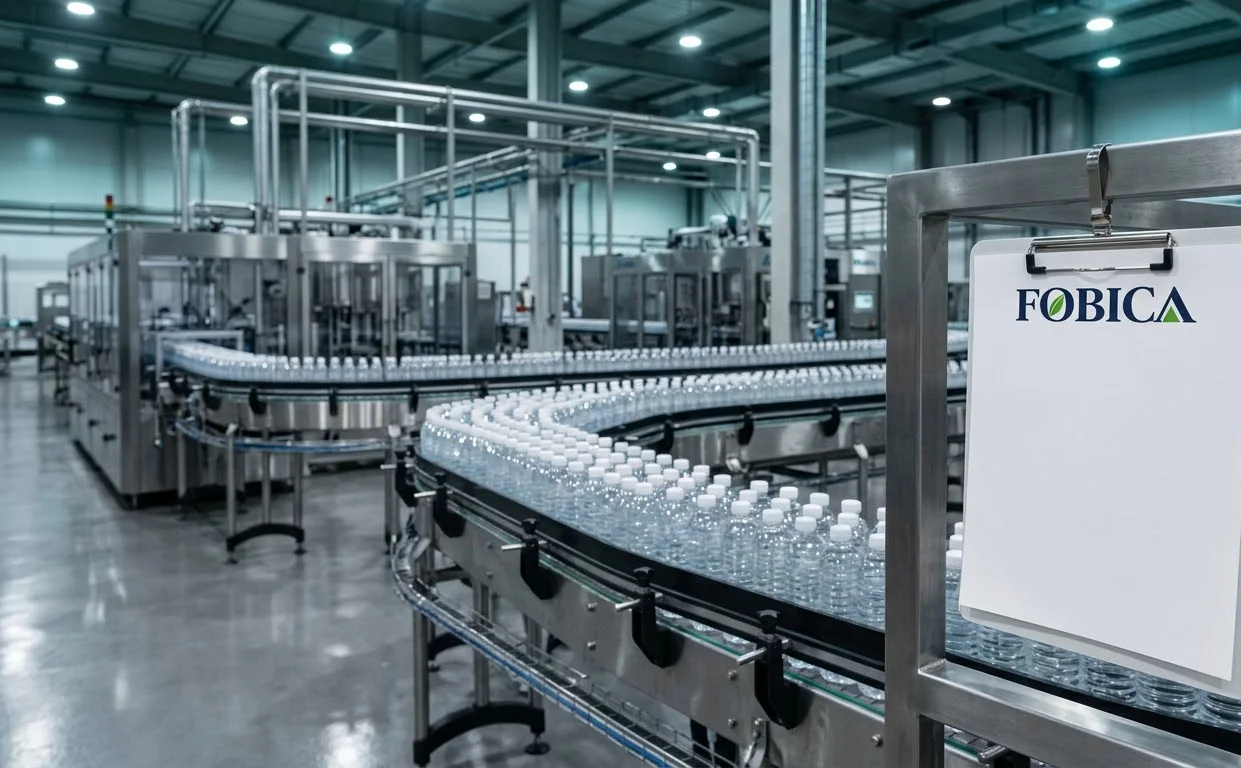
A line is only as fast as its slowest machine. Rinsing, filling, capping, labelling and packing need to be matched, with small buffers between them, so that one machine does not keep stopping the others.
The speed on a brochure is the rated speed in ideal conditions. Real output also depends on changeovers, cleaning, stoppages and operator skill. Ask vendors what output to expect in practice and plan around that.
Choose the level of automation
Semi-automatic machines cost less and suit small volumes or a first plant. Automatic lines cost more, need fewer people and give more consistent fill levels, capping and hygiene.
Automation pays back where it replaces repetitive manual work at volume, improves quality, or removes a bottleneck. It rarely pays back on a process that runs only a few hours a week. Look at each station separately rather than deciding for the whole line at once.
Plan for formats and changeovers
If the line will run several bottle sizes, check which change parts are included, how long a changeover takes and whether your team can do it without the vendor. Frequent, slow changeovers eat into output.
Check hygiene and utilities
- Product contact parts in suitable food-grade stainless steel, with smooth, cleanable surfaces.
- Easy access for cleaning, and a clean-in-place (CIP) system, which cleans tanks and pipes without taking them apart, where the process needs it.
- The power, compressed air, water and drainage each machine needs, so the plant utilities can be sized correctly.
- Guarding and safety features that meet the rules for your site.
Compare quotations like for like
Put every quotation into the same table before you look at the price. Gaps in one quotation often turn up later as extra costs.
| Compare | Why it matters |
|---|---|
| Expected output in practice | Shows whether the line meets your demand in real running conditions |
| Scope of supply | Which machines, conveyors, change parts and controls are included, and which are extra |
| Utilities consumption | Affects the size of your power, air and water systems and your running cost |
| Installation and commissioning | Who installs, who supervises, and what is charged separately |
| Training | How your operators and maintenance staff will learn to run and maintain the line |
| Spares | Which spares come with the line, and how quickly others can be supplied |
| Warranty and service | What is covered, for how long, and whether a service engineer can reach your plant |
| Lead time and payment terms | Decide your project schedule and cash flow |
Evaluate the vendor, not only the machine
Ask to speak to existing customers running similar lines, and if possible visit one. Check where service engineers are based, how spares are supplied and how the vendor has handled problems before. A slightly more expensive line with dependable support is usually the cheaper choice over its life.
Before you sign the purchase order
- A technical specification for every machine, attached to the order.
- A layout showing that the line fits your building, with space for operators and maintenance.
- Confirmed utilities requirements.
- Clear acceptance criteria for commissioning, such as output, fill accuracy and reject rate.
- The documents you will receive: manuals, drawings and spare parts lists.