Skip to content

Packaged Drinking Water Plant Expert Advice

From water source to finished bottle, and on to the market. We help entrepreneurs and existing manufacturers plan, build, certify and grow water plants, with sixteen specialist services in one place.

  • PET bottles from 100 ml to 2 L, and 20-litre jars
  • Water treatment, filling and QC laboratory
  • FSSAI, BIS and Legal Metrology readiness
  • Costing, production planning and market strategy
WhatsApp us your water plant question
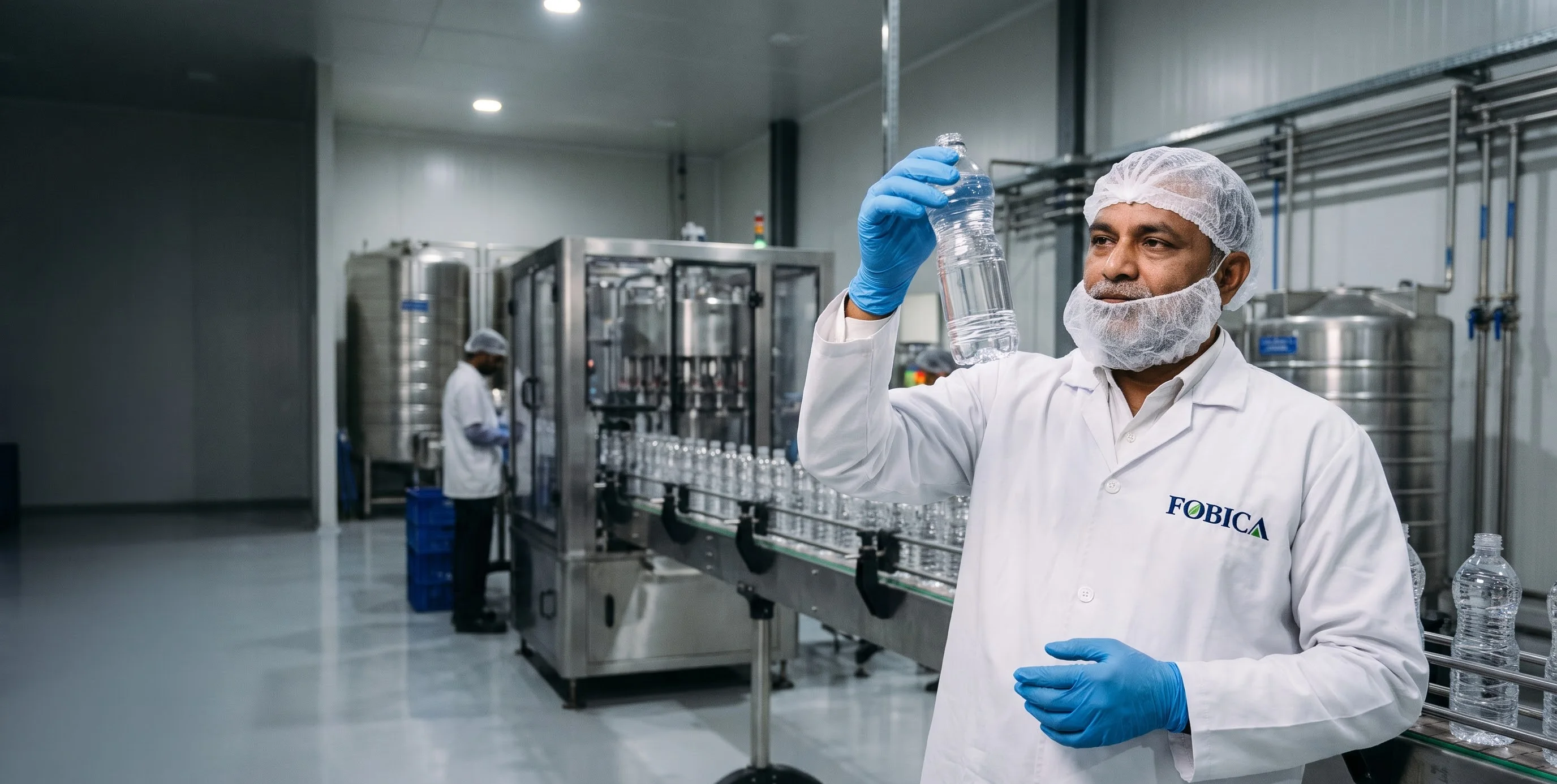
FOBICA expert in a hairnet, beard net and gloves holding a water bottle up to the light beside a bottling line

Decisions made before the first machine

Packaged drinking water looks simple and is not. Compliance, water quality, line efficiency and cost per unit all depend on decisions made before a single machine is ordered. FOBICA brings plant-floor knowledge to each one.

Who this is for

  • First-time water entrepreneurs
  • Running plants planning an upgrade or expansion
  • Brand owners weighing own plant against co-packing
  • Investors evaluating a water project
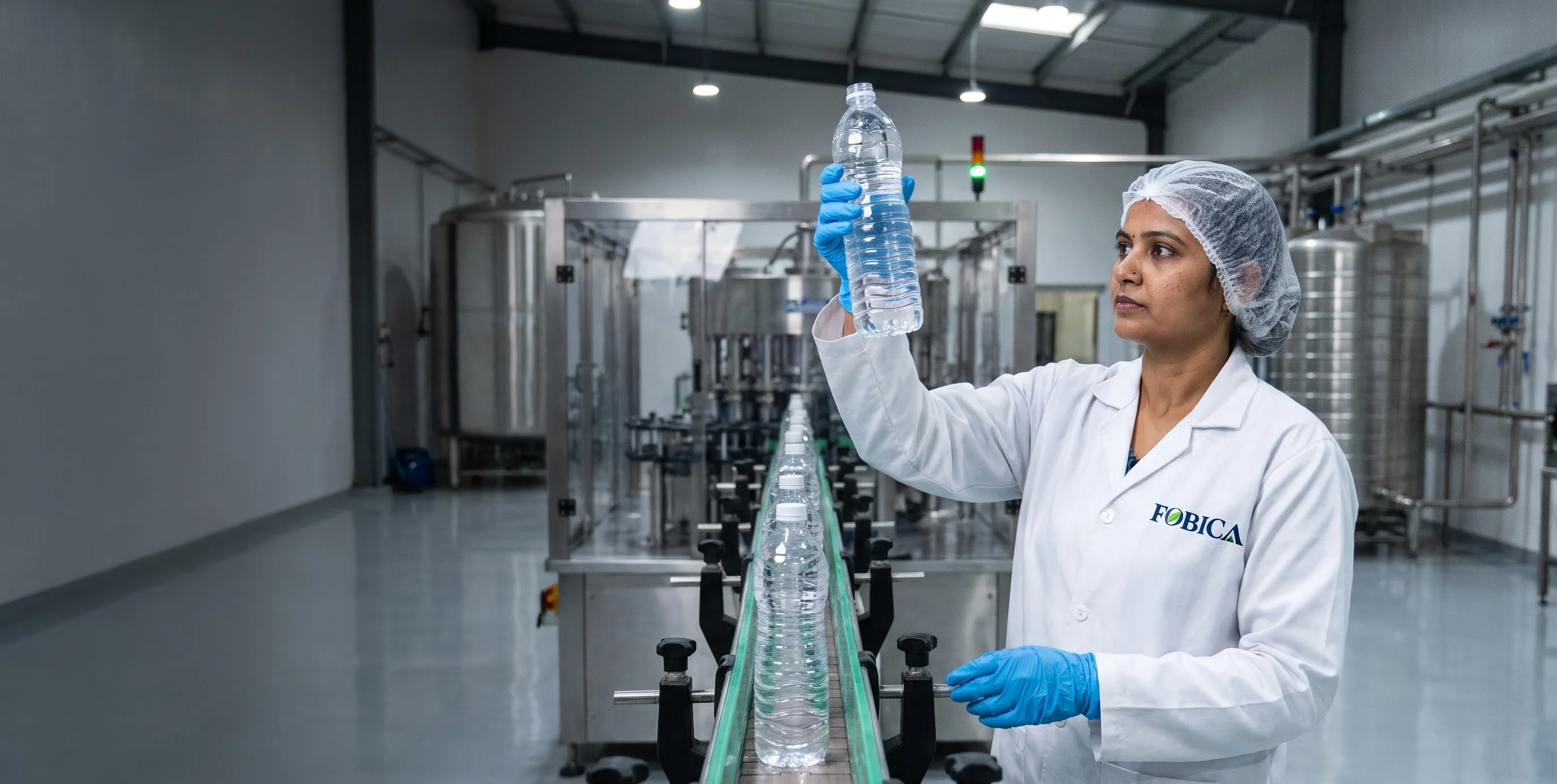
  • Expert checking a bottle against the light at a conveyor in a packaged water plant
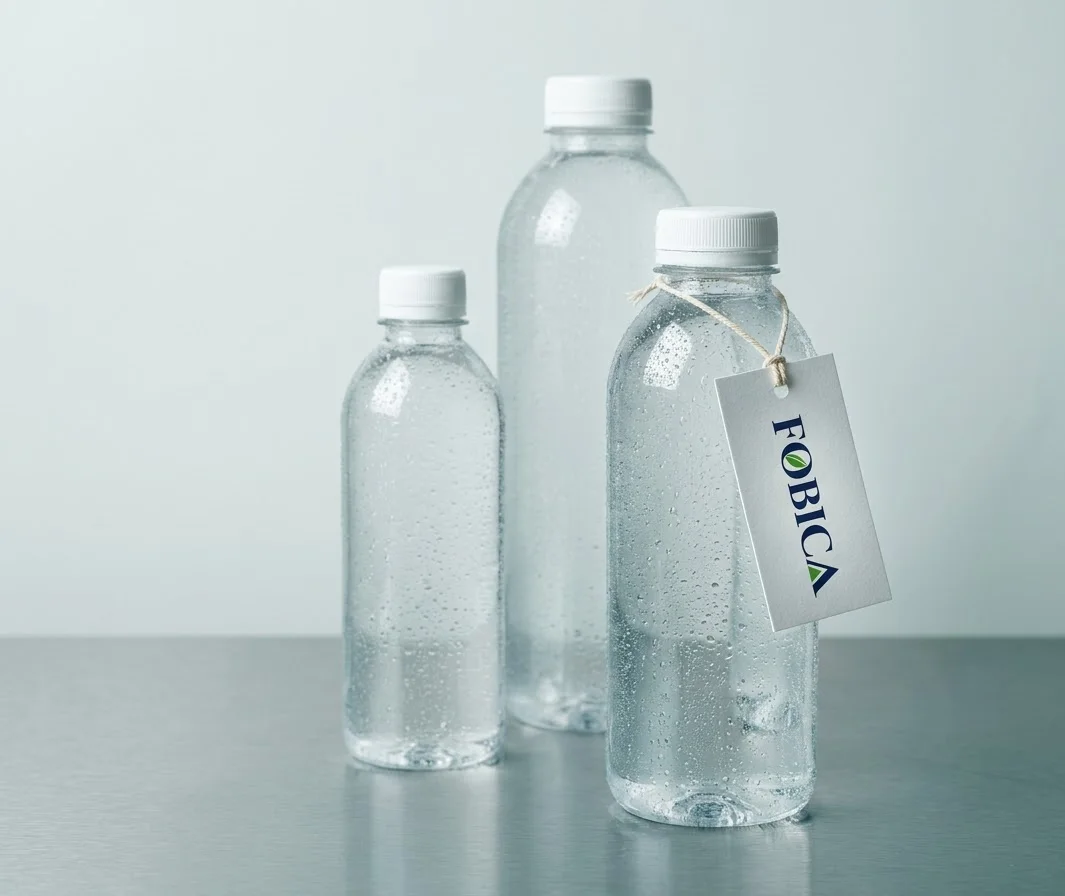
  • Unbranded PET water bottles with condensation and a FOBICA sample tag on brushed steel
  • Three water bottles with a FOBICA sample tag tied to the neck of the front bottle

PET bottles, 20-litre jars, or both?

Decide this first. Each format changes markets, equipment, space and margins.

  • 100 mlEvents, catering, flights and hospitality
  • 500 mlThe everyday retail and travel bottle
  • 1 LRetail, offices and long journeys
  • 2 LFamily and value packs
  • 20 L jarHomes, offices and dispensers
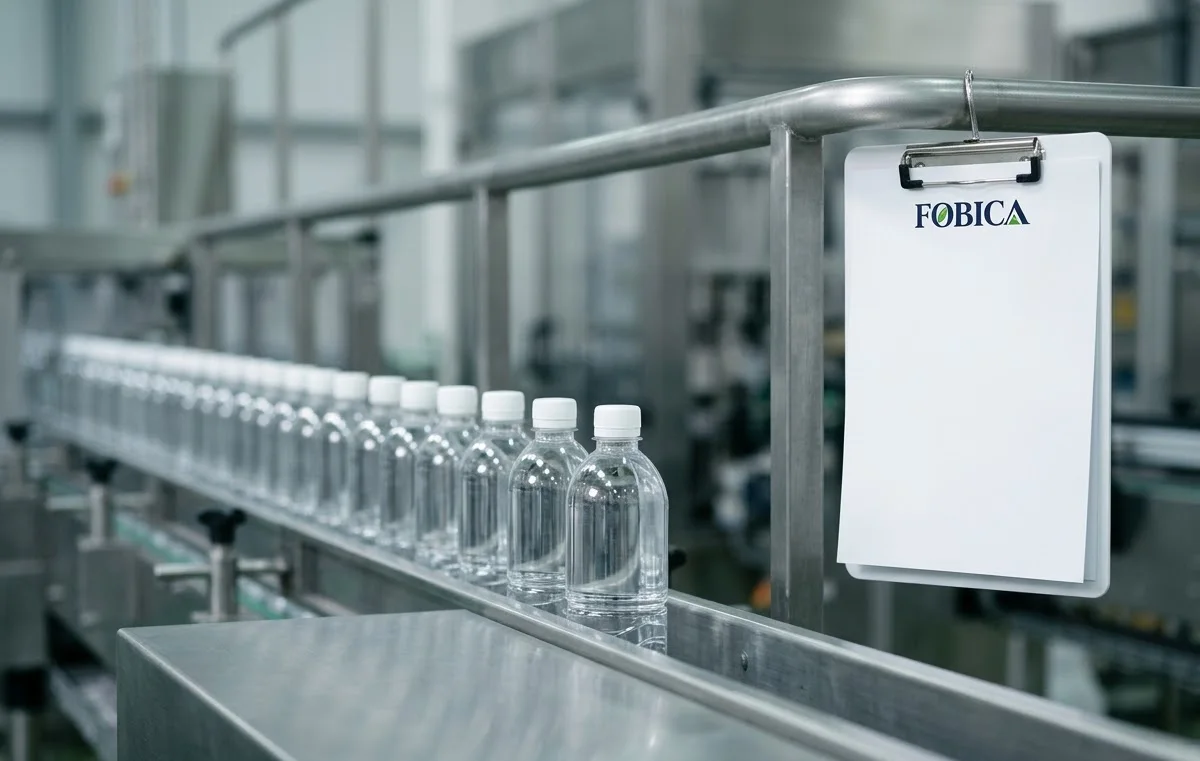
Bottles on a stainless bottling line, with a FOBICA clipboard hanging from the guard rail

PET bottling plant

Typical market
Retail, travel, hospitality and events, in 100 ml, 500 ml, 1 L and 2 L bottles
Main equipment areas
Treatment, blow moulding where in-house, rinse-fill-cap, labelling, shrink or carton packing
Planning focus
Line speed, preform cost and distribution reach decide margins.
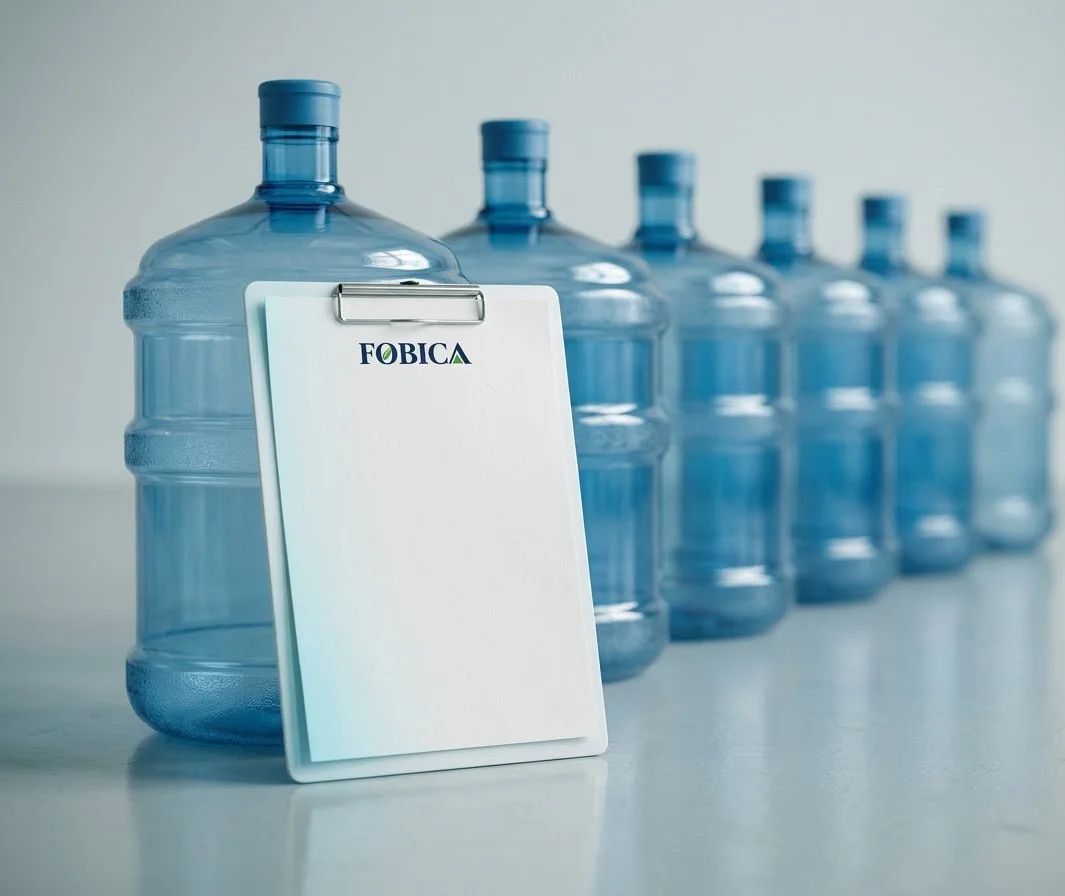
A row of 20-litre water jars with a FOBICA clipboard leaning against the nearest one

20-litre jar plant

Typical market
Homes, offices and dispensers
Main equipment areas
Treatment, jar washing and inspection, fill and cap, returnable-jar handling
Planning focus
Route planning and jar returns drive profitability.
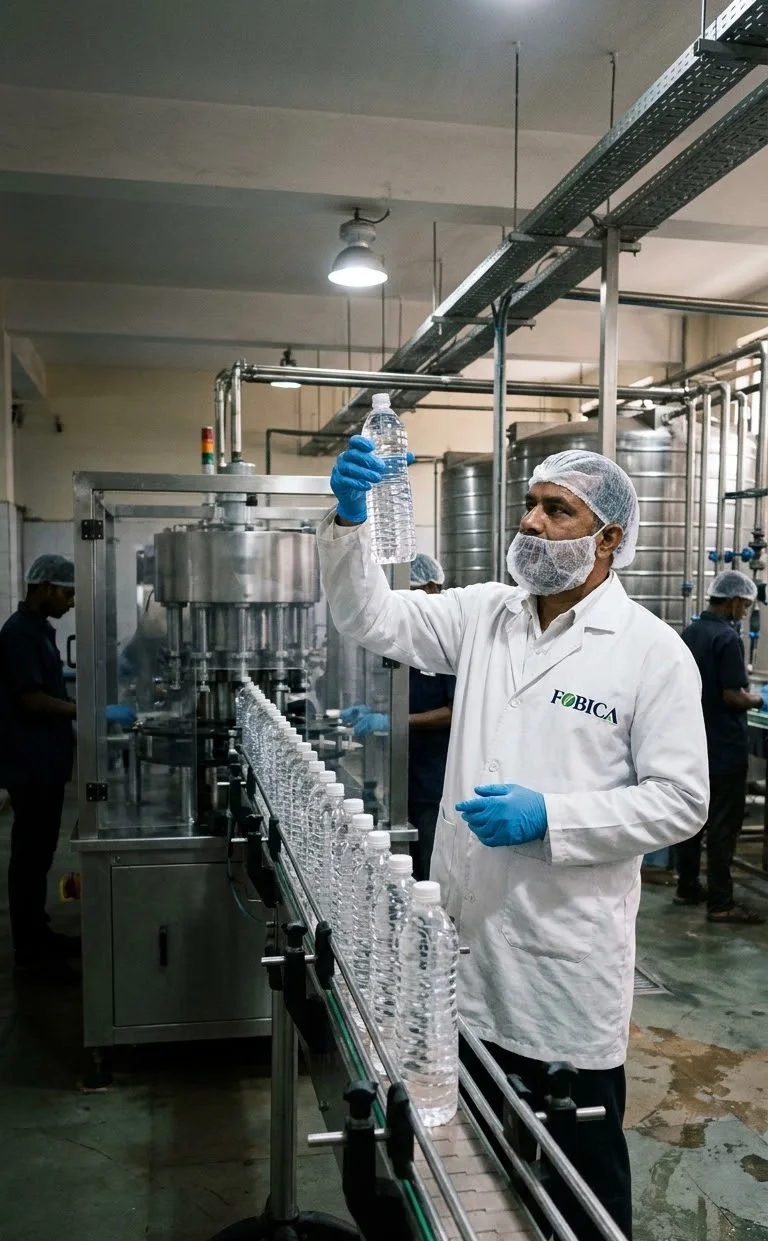
Expert in a FOBICA coat holding a filled bottle up to the light above a conveyor of water bottles

Combined plant

Typical market
Brands serving both segments
Main equipment areas
Shared treatment, separate filling halls and packing, planned utilities
Planning focus
Layout and utilities must be planned for both from the start.

A typical water plant, step by step

A stylised overview for planning conversations, not an engineering drawing.

  1. 01Raw water source
  2. 02Raw water storage
  3. 03Pre-treatment
  4. 04Purification (RO)
  5. 05Post-treatment & disinfection
  6. 06Treated water storage
  7. 07Rinse, fill & cap
  8. 08Coding & labelling
  9. 09Packing
  10. 10QC release
  11. 11Dispatch

The work behind a water plant, in four stages

Plan
  • New water plant project planning
  • Plant capacity planning
  • Plant layout
  • Costing
Build
  • PET bottling-line planning
  • 20-litre jar plant planning
  • Water treatment system planning
  • Machinery selection
Compliance and quality
  • FSSAI and BIS requirements
  • QC laboratory planning
  • Quality improvement
Operate & grow
  • Production planning
  • Manpower planning
  • Operational improvement
  • Brand development
  • Market strategy

What founders ask first

The questions we hear most from water entrepreneurs.

How much investment does a water plant need?

It depends on format, capacity, automation, building and compliance. A feasibility study breaks down every cost head, including working capital, before you commit.

PET bottles or 20-litre jars?

PET suits retail, travel and events; jars suit homes and offices with route-based delivery. Many businesses start with one and add the other. We compare markets, equipment, space and margins for your location.

Which licences and certifications are needed?

Packaged drinking water needs FSSAI-related licensing and BIS certification, along with Legal Metrology requirements for labels. Requirements change from time to time, so we verify them for your project. Licences are granted by the authorities.

How long does setup take?

It depends on site readiness, machinery lead times, civil work and approvals. We build a realistic, milestone-based timeline during planning and run compliance in parallel with the build.

How should plant capacity be chosen?

From demand, not from machine catalogues. We look at your target market, channels, distribution reach and budget, then size the plant with room to expand.

Planning another beverage? We also work across sparkling and alkaline water, carbonated soft drinks, juices and fruit beverages, energy drinks and bakery products.

All industries

Planning a packaged drinking water plant?

Share your location, format and capacity in mind. We will map the right next step.

CallWhatsAppBook Free Expert Advice